
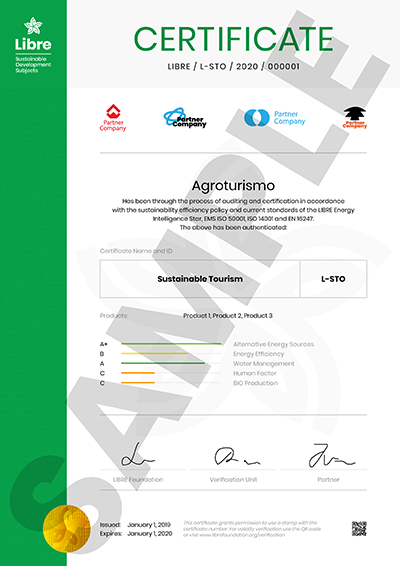
Certyfikat obiektu wskazujący na zrównoważoną turystykę dotyczący np.: hoteli, apartamentów, agroturystyki, centrów sportowych i rekreacyjnych. Celem certyfikacji jest wzrost świadomości klientów dbających o środowisko, ekologiczną żywność i zrównoważony rozwój. Dotyczy to właścicieli obiektów turystycznych, a zwłaszcza agroturystycznych i wskazuje klientom na najwyższą jakość obsługi i ekologiczne bio produkty.
W ramach certyfikacji obiekt otrzymuje 5 ocen na podstawie przeprowadzonego przez specjalistów LIBRE audytu.
Alternative energy sources | Udział energii pochodzącej z alternatywnych, w tym odnawialnych źródeł energii, w całkowitym bilansie energetycznym: A+ (>=90%), A (89-70%), B (69-50%), C (49-30%), D (29-10%), E (1-9%) |
Energy Efficiency | Zużycie energii w kWh/m2rok. Jeżeli obiekt jest zabytkiem, można zamieścić opis “MONUMENT”, not-applicable, bez wyliczanie zużycia energii. A+ (<= 20), A (21-40), B (41-60), C (61-100), D (101-150), E (>150). |
Water Management | Udział wykorzystania wody z własnych źródeł w całkowitym bilansie wody. Źródła własne to: deszczówka, studnie, desalinacja, oczyszczanie, itd. A+ (>=90%), A (89-70%), B (69-50%), C (49-30%), D (29-10%), E (1-9%) |
Human Factor | Punkty otrzymane za zarządzanie czynnikiem ludzkim. Można otrzymać do 100 punktów za: organizację, zarządzanie odpadami, CSR, innowację, zdrowie, ograniczenie emisji. A+ (>=90%), A (89-70%), B (69-50%), C (49-30%), D (29-10%), E (1-9%) |
Bio Production | Ilość produktów ekologicznych we wszystkich produktach oferowanych w obiekcie. Bio production to produkt ekologiczny własnej produkcji lub od innych certyfikowanych dostawców (LIBRE Sustainable Tourism, LIBRE Sustainable Food&Drug) bez zanieczyszczeń i pozostałości, leków weterynaryjnych, pozostałości środków ochrony roślin, dioksyn i polichlorowanych bifenylów, mikotoksyn, wielopierścieniowych węglowodorów aromatycznych, metali ciężkich, dodatków do żywności podnoszących walory smakowe, trwałość, ułatwiające obróbkę i poprawiające wygląd, bez radiacji. Tylko autentyczność – bez sztucznego postarzania, bez konserwantów, bez fałszywego nadawania nazw, bez składników zastępczych, bez GMO. Nie ma potrzeby dostarczenie wyników badań laboratoryjnych, jednak zaleca się, ponieważ Właściciel obiektu bierze pełną odpowiedzialność za nieprawdziwe informacje. A+ (>=90%), A (89-70%), B (69-50%), C (49-30%), D (29-10%), E (1-9%) |
Audyt może zostać wykonany tylko przez certyfikowanego audytora efektywności energetycznej posiadającego doświadczenie w odpowiednich obszarach (International Energy Efficiency Auditor), a przy nowo projektowanych i budowanych obiektach również certyfikowanego projektanta efektywności energetycznej (International Energy Efficiency Designer), lub instalatora (International Energy Efficiency Installer). Jedynie BIO Production mogą zostać zweryfikowane tylko bezpośrednio przez Fundację LIBRE.
Wszystkie certyfikaty są odnawialne raz w roku. Certyfikaty są weryfikowalne na stronie LIBREFoundation.org poprzez wpisanie jego numeru i daty wystawienia.